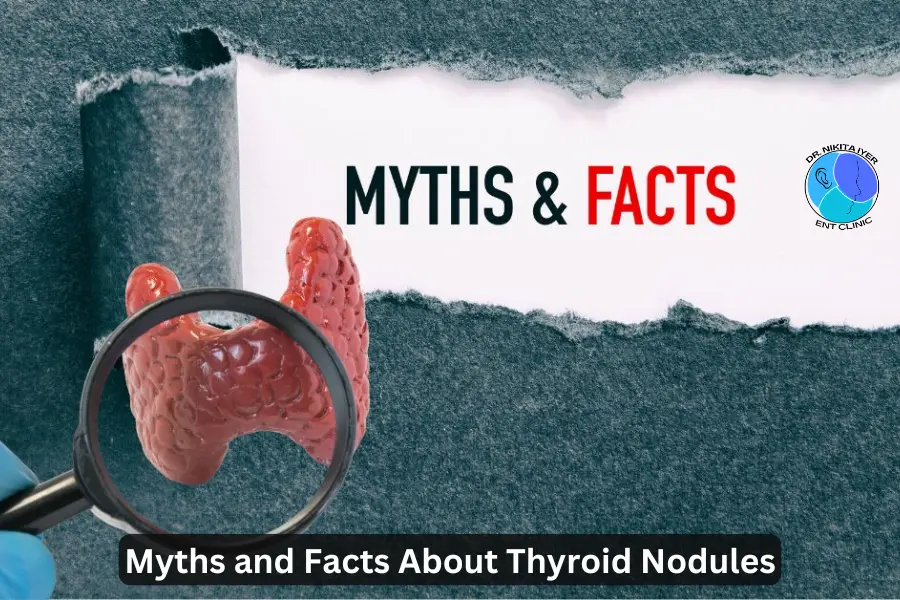
Thyroid Nodules are lumps that develop in the thyroid, which is a small butterfly-shaped gland usually located at the bottom of a person’s neck. They are quite common, especially in women and older people. Even though they are so common, there are still many myths about thyroid nodules that create confusion and anxiety in people, and lead to improper delays in seeking care.
In this blog, Dr Nikita Iyer, a leading ENT and asthma allergy doctor near me, highlights important information, as knowing the facts about thyroid nodules can help you make informed choices about your health.
Myth 1. All thyroid nodules are malignant
Fact: Most nodules found in the thyroid are benign, and less than 5-10% are malignant (cancerous). Most nodules do not represent any significant risk to you, but having a nodule evaluated is important for ruling out cancer. An ENT is able to evaluate a nodule's character using physical, imaging studies and sometimes fine needle aspiration for diagnosis.
Myth 2: Small Nodules do not require evaluation and/or monitoring
Fact: Even thyroid nodules that are small must be evaluated to determine if treatment is needed at present and on what basis future evaluations will take place. Most small nodules do not require treatment right away, but in order for any change to be recognized the small nodule must be monitored regularly. Regular monitoring helps you discover any changes in a nodule while still small, avoiding potentially serious treatment delays for airway obstruction or damage to adjacent tissue from the nodule.
Myth 3: Only women develop thyroid nodules
Fact: While thyroid nodules occur more regularly in females, men can also develop them. Factors that contribute to an increased risk of developing a thyroid nodule include age, radiation exposure, a family history of thyroid problems, and some other health issues. ENT specialists consider all of these factors when they evaluate thyroid nodules in both males and females.
Myth 4: All thyroid nodules will cause symptoms
Fact: Although many people do experience symptoms related to their thyroid nodules, the majority of thyroid nodules are asymptomatic (i.e., no symptoms) at the time of incidence. They are often found by accident during a routine physical or X-ray imaging. The symptoms that do occur from a thyroid nodule occur from either a thyroid nodule that is large or one that has caused surrounding structures to be adversely affected. Following an ENT evaluation or a referral to an expert evaluation will often lead to identifying thyroid nodules before the emergence of symptoms.
Myth 5: Surgery is always needed to treat a thyroid nodule
Fact: Surgery is not always necessary for the treatment of a thyroid nodule, and most of the time, benign thyroid nodules do not require surgery as a form of treatment. Benign thyroid nodules can often be treated by observation, medication and/or batteries of minimally invasive treatment options. Surgery will be required for malignant thyroid nodules or for benign thyroid nodules that cause symptoms and/or are growing rapidly. ENT surgeons will evaluate thyroid nodules and perform surgery only when necessary, while assuring patient safety and protection of the voice box and nerves.
An ENT otorhinolaryngologist is specially trained to evaluate thyroid nodules, particularly when they affect the patient’s ability to swallow, breathe, and/or speak normally. Our team of ENT physicians uses ultrasound, FNAC, and thorough physical exams to determine the best treatment for each individual thyroid nodule patient.
Thyroid Nodules are very common and usually not cancerous, but careful evaluation to exclude more serious problems from the differential diagnosis is necessary to rule out more serious problems. If you have an understanding of the myths and facts, you will know how to take steps to better manage your thyroid health.
If you notice a lump or swelling on your neck, Dr. Nikita Iyer, a trusted ENT and vertigo doctor in Chembur, can provide you with an expert evaluation of your thyroid nodule and provide you with treatment based on your needs. Call today to schedule an appointment to receive an accurate diagnosis and begin your journey toward peace of mind.