
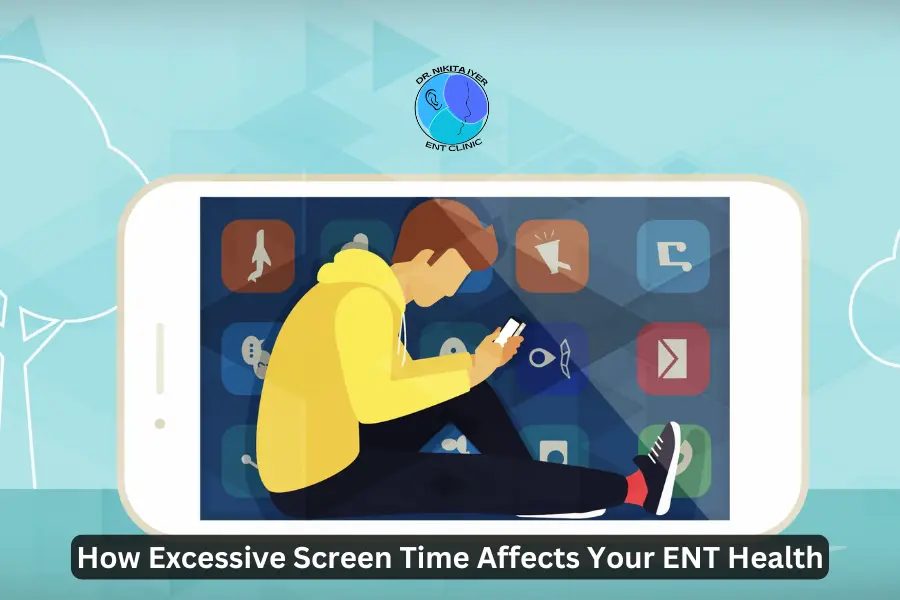
In our digital world today, screens are everywhere, including smartphones, laptops, tablets, and televisions. And while technology has improved our quality of life through convenience, too much screen time can affect your Ear, Nose, and Throat (ENT) health in ways many people don’t know. According to Dr Nikita Iyer, a leading ENT otorhinolaryngologist, Prolonged exposure to screens can affect posture, cause eye strain, disrupt sleep, and affect breathing, all of which are contributors to ENT-related problems.
One of the most common effects of too much screen time is digital eye strain. This strain is typically accompanied by headaches or discomfort in the forehead or around the eyes, which is often mistaken for sinus pain. Keeping your eyes fixed on one spot for prolonged periods of time decreases the actual number of times you blink, thereby leading to dry eyes, which can cause facial tension and lead to symptoms similar to migraines.
Too much screen time also leads to poor posture, including what is simply referred to as “tech neck.” When the head is protruded for long periods of time, there is an excessive amount of force applied to the neck and throat muscles, thereby affecting blood flow and nerve signals. Over time, this can lead to chronic pain in the neck or throat, fatigue of the voice, and difficulty swallowing. Poor posture can lead to mouth breathing instead of nasal breathing.
Breathing through one's mouth is an indirect consequence of extensive use of digital devices. When paying attention to a screen, many people will breathe with their mouths rather than their noses at times. This can result in dryness of the throat and nasal passages, which in turn leads to sore throats, hoarseness (raspy voice), bad breath, and repeated throat infections. Further, mouth breathing will also diminish the ability of your nose to naturally filter out dust, allergens and chemicals in the air.
Additionally, too much time in front of screens, especially before going to sleep, can impact the quality of sleep by suppressing melatonin due to exposure to blue light. Insufficient sleep also could increase nasal swelling and lead to worsening symptoms of acid reflux or loud snoring, particularly in people who already have ENT symptoms related to reflux.
Lastly, far too many people are using earbuds or headsets for extensive periods of time while using digital screens, which could negatively affect their ear health. Studies have shown that prolonged exposure to very loud levels of sound can lead to hearing impairments like noise-induced hearing loss, ear fatigue, tinnitus (constant ringing in the ears), and other forms of ear discomfort. Furthermore, sharing earbuds or headsets and not keeping them clean could increase the likelihood of developing an ear infection.
While these are all relatively minor effects, over time, the accumulation of these will lead to ongoing ear, nose, and throat (ENT) complaints such as chronic throat clearing, sinus pressure, voice changes, and ear discomfort. Fortunately, making a few small lifestyle changes, such as taking regular breaks from screens, maintaining good posture, breathing through the nose intentionally, regulating the volume of your voice, and reducing screen time before you go to bed, can produce significant results.
If you are experiencing ongoing ENT symptoms such as frequent sore throat, headache, vocal strain, ear discomfort, or nasal obstruction that do not improve with minor adjustments, you should consult an ENT (ear, nose, and throat) physician like Dr Nikita Iyer, a trusted ENT and allergy and asthma specialists near me, to determine the cause of the symptoms so that you can prevent any complications from developing.